
AI Openness: 3 Years on from Llama 2
Released on 23 July 2026
A time-boxed report summarising three years of AI openness from the launch of Llama 2 as open innovation on 18 July 2023 to the launch of the frontier open model Kimi K3 on 18 July 2026. We share the what, the how, and the why, including the shift from open source being a technical decision and now being a lever of influence and soft power, as well as why the UK should have its own Foundation. Delving into what the data and third-party reporting tells us about the technology and market shifts, and a synopsis of key global policy, all with a slant on AI openness.
Report Includes:
Introduction and Conclusion
- Three Years on from the Opening of Llama 2, Professor Amanda Brock, CEO, OpenUK and OpenHQ
- Dr Jennifer Barth, OpenUK Research Director
Case Studies
- Open weights, owned compute and the case for sovereign AI, James Drayson, CEO and Co-founder, Locai Labs
- Agentmemory, Rohit Ghumare, Creator & Maintainer, Agentmemory
- Open weights, owned compute and the case for sovereign AI, Tom Wilkinson, Chief Data Officer, Scottish Government
- The OpenClaw Foundation, Vincent Koc, Chief Architect, OpenClaw Foundation
Thought Leadership
- The Commons we have not (yet) created, Anastasia Stasenko, Founder and CEO, Pleias
- Open Source tools for AI, Hannah Foxwell, Co-founder BIMP and creator of AI for the rest of us
- Security and Vendor response, Karan Saini, Research Manager, OpenUK
- The Entrepreneur’s AI Journey, Matt Barker, Founder and CEO, Bolt MCP
- The EU Open Source Policy, Sachiko Muto, Chairwoman, Open Forum Europe
- Security, Identity and Harnessing Agentic, Sal Kimmich, Gadfly AI
Fireside Chats
- Open foundation models enabling a map of the planet, Professor Anil Madhavapeddy, Professor of Planetary Computing, University of Cambridge
- Mobile Context Protocol (MCP) and Protecting its openness, David Soria Parra, Member of Technical Staff, Anthropic
Executive Summary
Our report looks at the global history of AI Openness in the context of Llama’s launch as open innovation on 18 July 2023, and three year journey since culminating in Moonshot release of open weight model Kimi K3, challenging “best” frontier model. The report scans the technological, business and policy evolution and offers deep analysis of the relevant data and themes in AI openness. AI Openness has shifted to strategic capability, and no longer a technical choice
Evolution of models from Llama 2
- Llama 2 – never open source but open innovation. A critical step in shifting AI to openness
- DeepSeek R1 – open model 20% of cost of comparable models, distilled existing models including Llama 2
- China’s Moonshot AI – Kimi K3 on third anniversary of Llama has capabilities appearing to match best frontier models
- Evolution of models to small models like India’s Sarvam
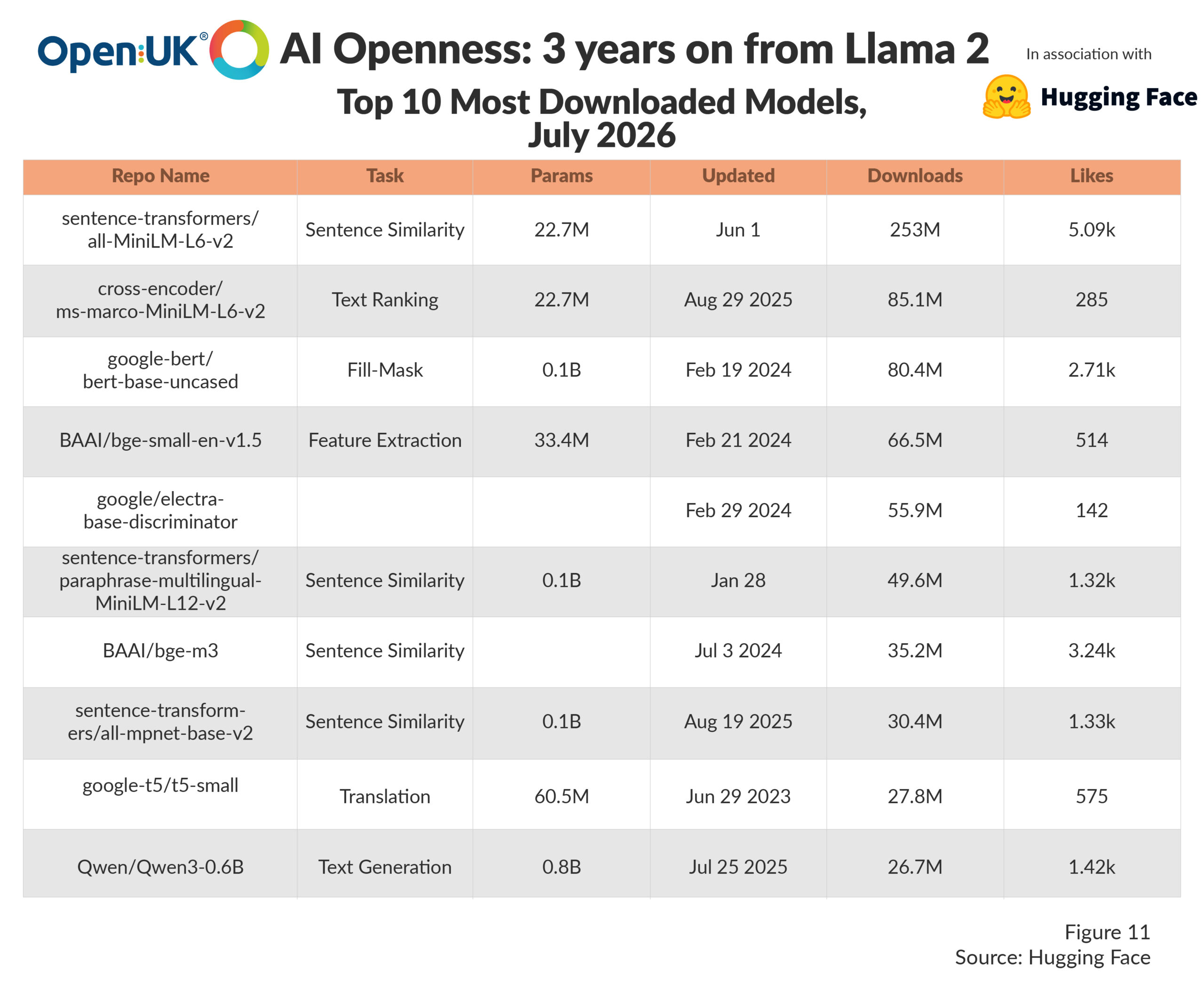
- Models predominantly corporate and shared on Hugging Face whilst Agentic, Dev Tools and infrastructure being evolved by individuals and collaborative communities on GitHub
- Model adoption delayed by external environment and production readiness not capability
- Shift in thinking – biggest not best. Customisation is critical, see Lumai case study
Agentic Harness and AI Openness
- Agentic AI Harness for Models – open source community and individuals/ innovators building
- UK evolving critical agentic technologies including founding of OpenClaw and AutoGPT
- OpenAI admit an agent hacked Hugging Face, in early public example of an AI System
- Enterprise AI adoption accelerating, with agentic systems increasing deployment
- Infrastructure Layer likely where value and return will be seen – shifting thinking on ROI
Dev Tools and Infrastructure
- Dev tools are AI Native and open source, now key to development of AI
- De facto standards emerging such as MCP with foundations being built to host these (all currently US based) see MCP case study
- AI reshaping how software is developed; AI tools shaping developer choices e.g. language
Open Source Ecosystem
- Open Source projects overwhelmed by AI contributions but policy is evolving in projects
- New US Foundations: Agentic AI Foundation, Agent Name Service, Akrites Foundation and t x402 Foundation – vendor-originated protocols like MCP under Linux Foundation governance and founders running closed models. Recognises infrastructure and dev tools open source
- Enterprise drive to vulnerability management – Chainguard IBM Red Hat and OpenAI products geared to support maintainer security challenges, with variable upstream impact
The AI Openness Definition Debate
- What open source means in AI is unresolved, Open Source AI Definition did not gain support
- Alternative approaches focus on disaggregation of AI component to measure openness and likely better approach – examples Stanford, Radboud and LF Model Openness Framework
- Accusations of Meta open washing Llama 2 reached mainstream press
- Language shifted from open source to open weight models and AI Openness
- G7 actively looking at what AI Openness means in 2026 following June meeting/ statement
China now leads open source AI
- China distillation models to create DeepSeek R1, Alibaba’s Qwen family and Moonshot AI’s Kimi family. Focus on low compute usage across all. Adoption growing
- Policy level eight year program across two consecutive Five-Year Plans shifting emphasis to reducing proliferation and monetisation. Xi Jinping restated open source commitment in four-point policy at Shanghai AI Summit, announcing WAICO Foundation, July 2026
- Focus on embodied AI as world shifts to utility of AI for industrialisation
US Response
- Unprecedented investment and spend in proprietary AI with talk of bubble
- US export control restrictions on NVIDIA chips to China and Presidential Executive Order on Anthropic Claude Fable and Mythos crystallised growing global AI sovereignty fears
- US claims distillation is breach of copyright (perhaps ironic when training is considered)
- US reportedly in turmoil considering regulatory and soft power responses to Kimi K3
Shift in Models
- Value in models shifting from size to customisation, highlighted in Locai Labs case study
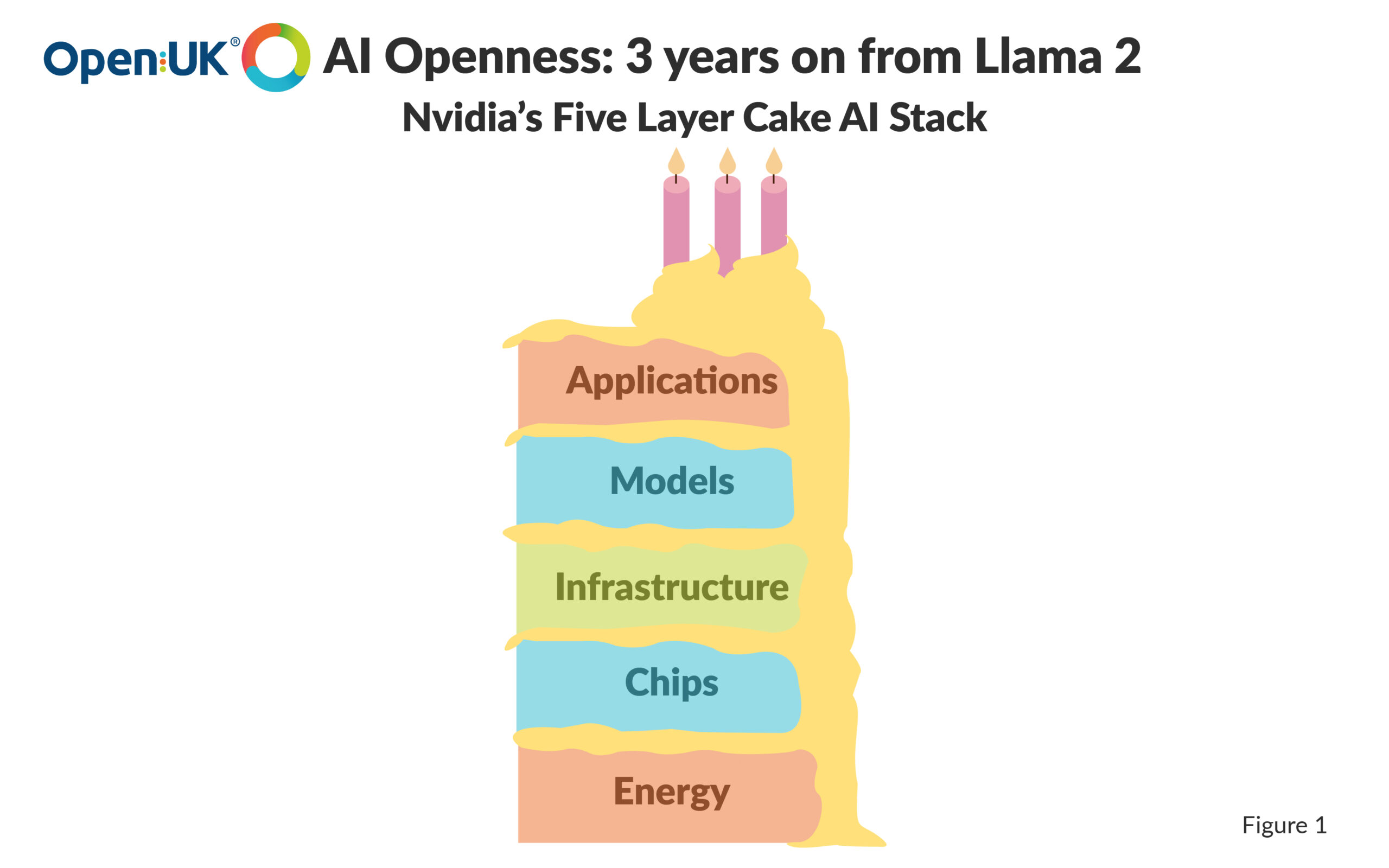
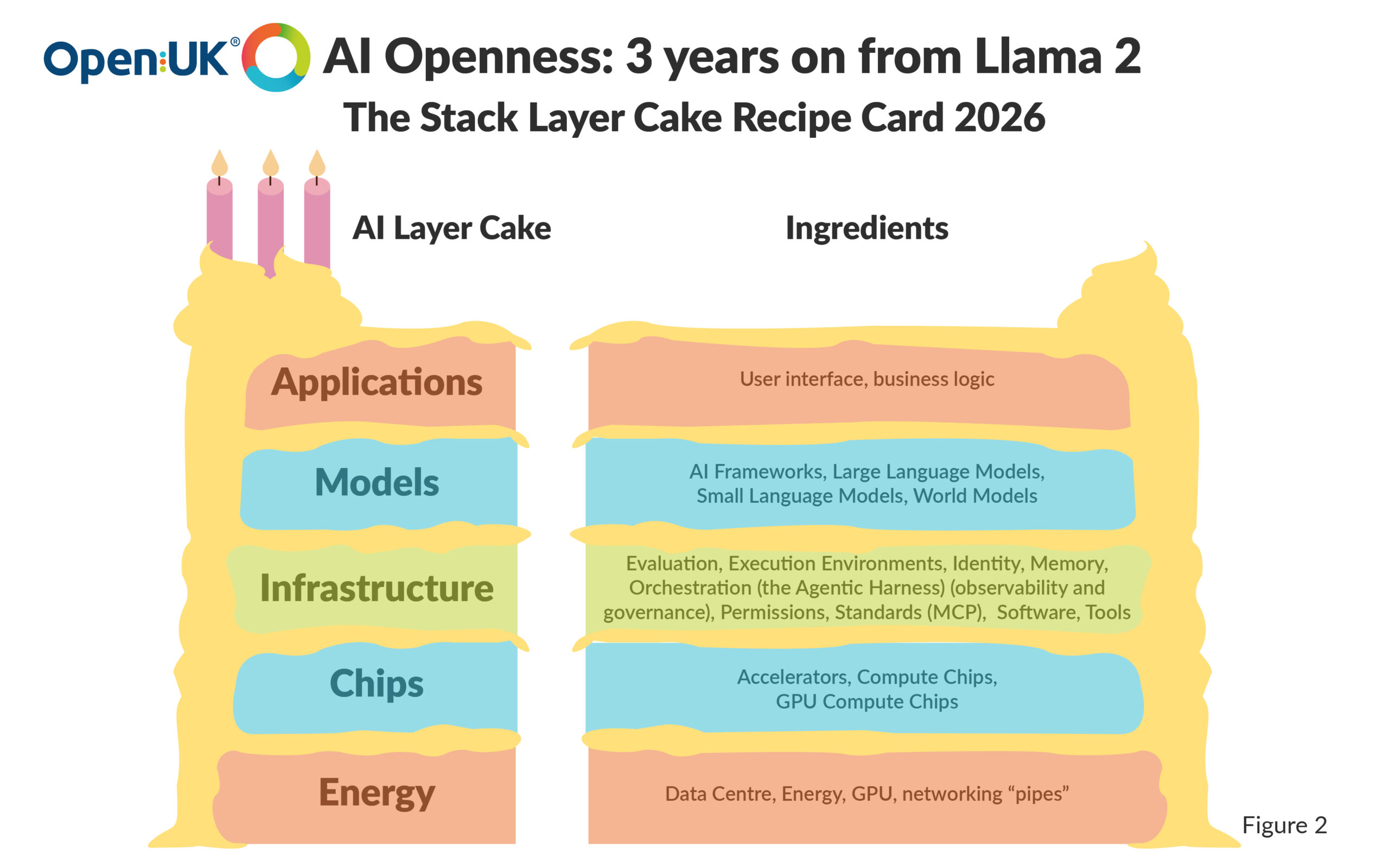
- Sovereignty layered across the Stack generally following NVIDIA’s five-layer-cake
- Localisation being accepted by many rather than build from ground up
- Potential shift in data centres and energy infrastructure as a consequence of smaller models
- Copyright in Text and Data Mining for the UK remains unresolved and yet more consultation
Analysing the Repo Data
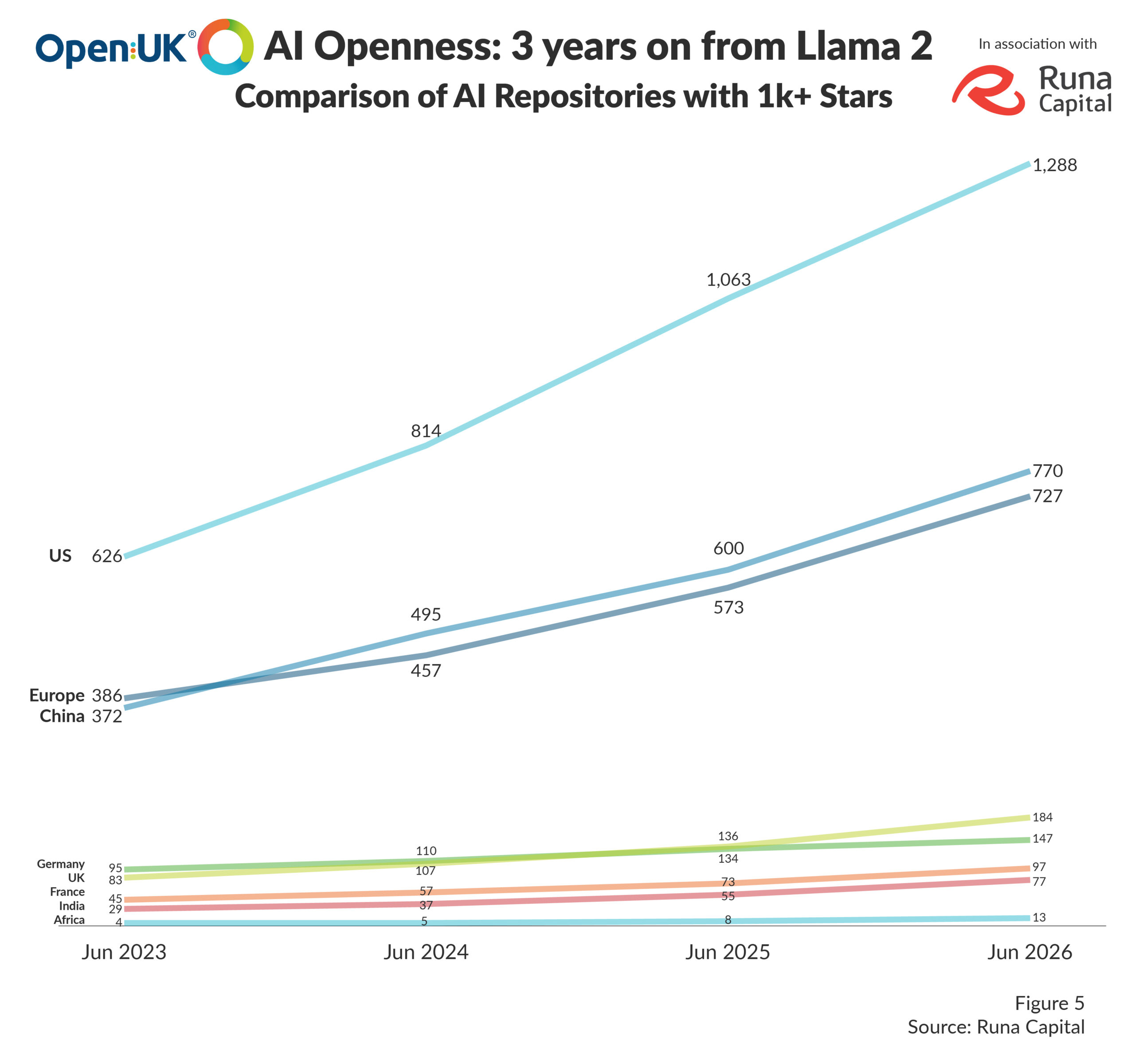
- 5x as many GitHub Repos with 1,000+ Stars as in 2020US 1,131, China 685, UK 161
- UK moved ahead of Germany whose growth is slowest in top tier
- 1,000+ Stars GitHub Repos doubled since July 2023 – 2,159 to 4,806
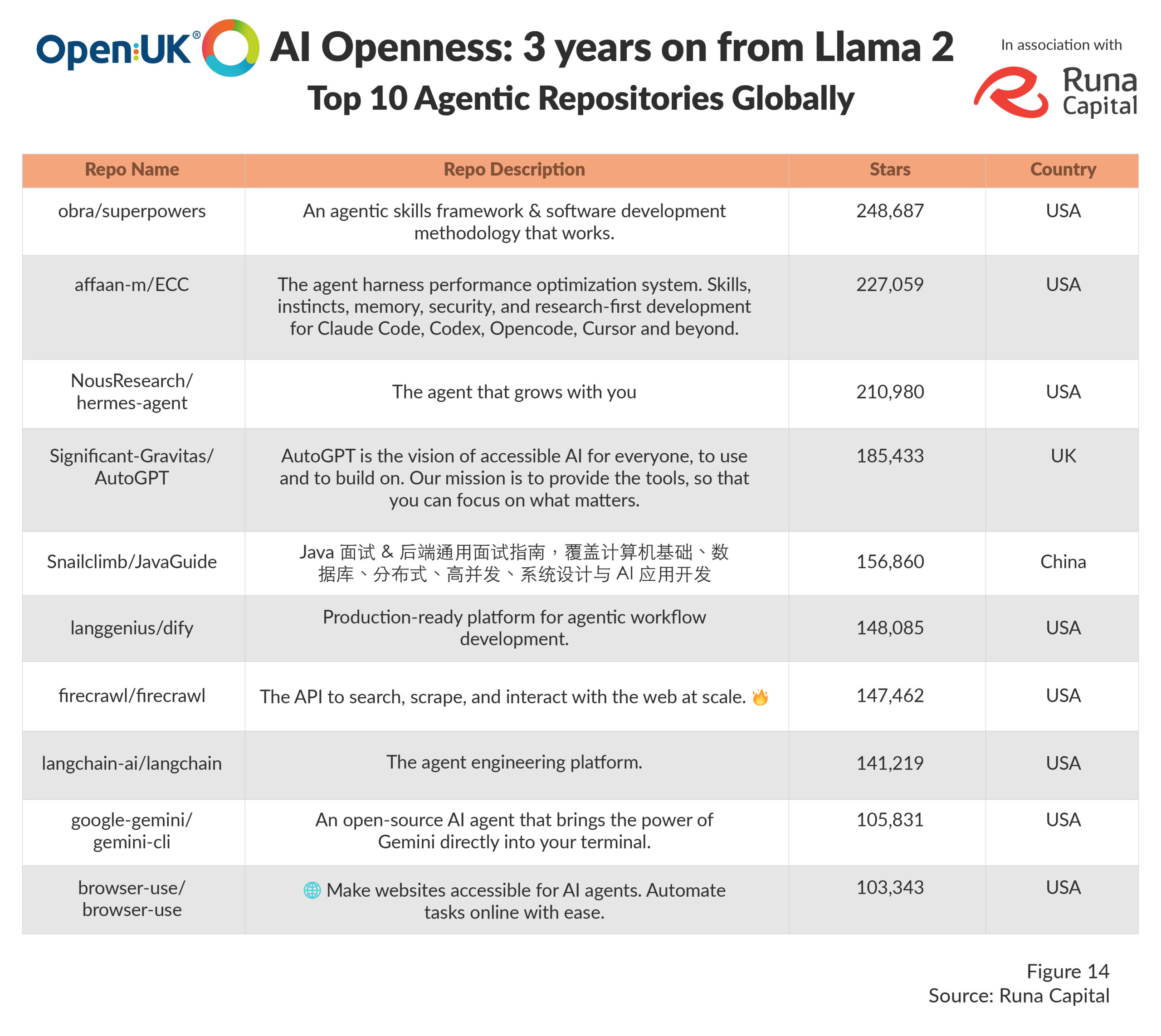
- 40% of Agentic 1000+ Star Repos had none a year ago
- 37% of Agentic 1000+ star Repos did not exist a year ago
- UK Agentic Repos amongst top in world
- Agentic Repos created by individuals, collaborative, and community driven whilst top models are corporate built
- OpenClaw, created in London, has own foundation (see case study 2.11.3) second most popular topic on GitHub, replaced UK’s AutoGPT as fastest growing
Sovereignty
- Digital sovereignty is a key driver of open source AI policy, EU €3B investment and open source policy as part of sovereignty Strategy – explored in Thought Leadership
- Open source recognised as cornerstone but its globally collaborative nature and fact anyone can use it for any purpose on the outbound not just inbound often missed
- Layered sovereignty, current thinking, following five tier “NVIDIA Layer Cake”
- US export control on Claude Fable and Mythos crystallised geopolitical concerns
- Country models -debate whether from scratch of customise, shift for some to small models
- UK’s industrial strategy recognises AI’s importance and new PM shifting UK AI thinking to this, AI Minister role in UK escalated to Cabinet position
Press Release and Related Press
- OpenUK calls for a UK version of the Linux Foundation – Computer Weekly, 24 July 2026
- Why China is overtaking the US as open AI leader – Computing, 24 July 2026
- Tech leaders issue letter to train Uncle Sam about value of open weight AI – The Register, 27 July 2026
- Nvidia, Palantir, Hugging Face join 30 others in race to defend open-weight AI from cyber threats – The New Stack, 27 July 2026
OpenUK Annual Survey
Contribute to our Research by sparing 30 minutes to complete our survey in partnership with our Economists in Residence, The PSC – wherever in the world you are, whether you are working or not and whatever sector you might work in.