
Fireside Chat: Model Context Protocol (MCP) and Protecting Its Openness
AI Openness: 3 Years on from Llama 2 Report
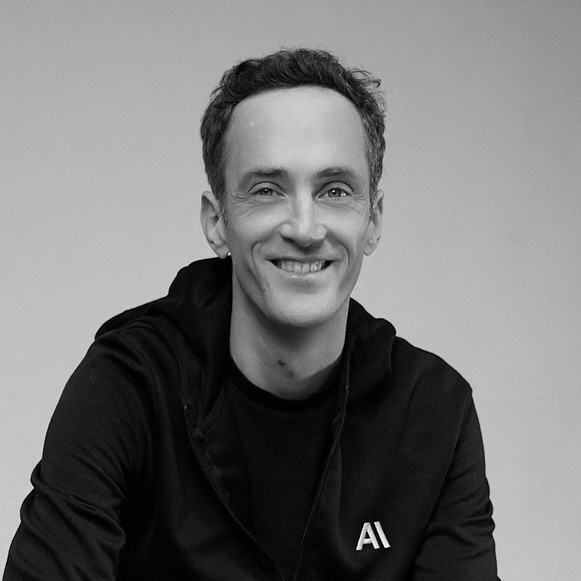
Please briefly tell us about yourself, your role, and how you came to be in it?
I am currently a Member of Technical Staff at Anthropic and the Co-Creator and current Lead Maintainer of the Model Context Protocol. I joined Anthropic 2 years ago, after working 10 years at Facebook / Meta on developer tooling, source control and static analysis.
How did you get involved in open source and what impact has it had on your career?
Since the beginning of my career I have worked on Open Source. I started working part-time as an engineer at a small agency (Mayflower GmbH) that worked a lot with PHP in Munich. One or two people were deeply involved in PHP’s development and that’s how I got involved. I started working on small patches, documentation, libraries, these types of things. It’s really thanks to my mentors there that I got involved in Open Source. The work on PHP later allowed me to get a part-time job during university at Sun Microsystems working on optimizing PHP for Sparc processors. This was the first job I got hired for because of my background in Open Source. At the same time I was the PHP 5.4 and PHP 5.5 release manager and on the side I got deeply involved with Git and Mercurial, leading me eventually to work on Mercurial where I wrote some key parts. One of the people involved in the Mercurial community was building a Source Control team at Facebook, and that’s how I ended up there. It was the start of my career. Getting into a FAANG company only happened because of Open Source. You can easily say that my career is built and enabled mostly because of my Open Source contributions. It paved the path I am on.
Who worked with you on MCP and what problem were you trying to solve?
I worked on MCP together with Justin Spahr-Summers. While the idea was mine, Justin really was the one who believed in it being important and helped to drive a lot of the initial implementation. We wanted to enable people to bring their workflows to AI. In a way we wanted to build the limbs to the AI brain. At the time the models got increasingly more capable and it was clear to us that the missing piece is allowing people to build for themselves and connect their systems and flows to these systems. We also knew that people are using a wide variety of clients, be it IDEs, Desktop applications like Claude Desktop or websites. So we needed to solve the classic NxM problem, N clients need M integrations. A protocol reduces this to N+M+1.
How did your open source backgrounds shape your approach in building MCP?
It was clear to me that building a protocol only works when you succeed in building an ecosystem. My experience told me that the most sustainable way to build a successful ecosystem is through open source. My background here of course helped me significantly to understand (1) why developers want an open source solution (2) why ecosystems benefit from open source and (3) how to successfully build an Open Source project.
Why was open sourcing it the right call rather than keeping it as an internal advantage?
I believe MCP only works because it is open source. You need to allow people to build client integrations, you need to allow people to build servers. This only works if you have an open specification of the protocol connecting client and server. It’s only logical that of course you will want to provide an open source implementation of the SDKs for the protocol then as well. Protocols are definitions for how systems communicate with each other. They only work if they are open and can be freely implemented. The alternative is to do a proprietary API. You can do that, but we believe that an open source protocol like MCP uplifts everyone in the ecosystem, and allows people to use AI more as a whole.
For a non-technical reader, what does MCP do and why does it matter?
MCP (Model Context Protocol) is a universal adapter that connects AI assistants to the tools and data you actually use, email, files, Slack, databases. Think of it like USB: instead of building a custom integration for every AI-and-tool pairing, a tool builds one MCP connection and any AI assistant can use it. It turns AI from something that just talks about work into something that can do work, read your real files, search your real messages, update your real spreadsheets. MCP enables one conversation to handle your entire digital life, whether you’re planning a big purchase, building a business, or writing a novel.
Why did Anthropic donate MCP to a foundation?
We knew from the early days of MCP that making a true standard requires ensuring that such standard stays vendor neutral and without any trademark or license risks. Early in the process we decided that we need to either create a foundation or donate it to a foundation. With the Linux Foundation we did eventually find a great home. We donated MCP to the Linux Foundation precisely so the developer community can trust it will stay open and vendor-neutral. And we contributed to a $12.5M fund at the Linux Foundation to strengthen the security of the open source ecosystem more broadly.
MCP has been adopted even by rivals like OpenAI and Google – what made that cross-industry cooperation possible?
MCP solved a problem that every AI company shares, so adopting it is simply rational. Before it, connecting an AI system to an external tool meant building a custom integration for each pairing. MCP replaced that with a single open standard, so a tool builder writes one connector that works everywhere. In addition, we build MCP as a truly open source project. This included open governance that is merit based and transparent decision making. This allowed others to engage and build trust that an open standard can work, before fully committing.
What does MCP tell us about where open standards fit in the AI era?
Open standards keep AI companies competing on model quality and safety, not on who controls the tools. Open source software is essential for building a secure and innovative ecosystem for agentic AI. Myself and Anthropic are excited to continue contributing to MCP and other agentic AI projects through the AAIF. We recently launched a dedicated program for open source developers building on MCP, because the community building on this standard is as important as the standard itself.
As agents move from coding into general knowledge work, what’s next for open infrastructure?
Anthropic supports open source software when it makes sense – like the development of MCP, and we will continue to innovate that. We believe proprietary models are the safest for widespread enterprise development. As models become more advanced, what you can build with them grows, but so does the complexity of building well. At Anthropic, we’re invested heavily to ensure Claude is a true virtual collaborator, while keeping humans in the loop on the work that matters most.
First published by OpenUK in 2026 as part of AI Openness: 3 Years on from Llama 2
©OpenUK2026 
Download Thought Leadership Download Report View all thought leadership