
Open Source Africa Report
Released on 27 March 2026
Examining the open source landscape across three Commonwealth nations — Kenya, Nigeria and Rwanda — this report draws on GitHub data, package download statistics from Scarf, and insights from OpenUK and OpenHQ engagements in Nairobi and Kigali in early 2026. Timed for Commonwealth Day, it shows a continent moving from consuming technology built elsewhere to building and governing its own digital infrastructure, with open source at the heart of that shift.
Report Includes:
Introduction and Conclusion
- Introduction, Professor Amanda Brock, CEO, OpenUK and OpenHQ
- Conclusion, Dr Jennifer Barth, Chief Research Officer, OpenUK
Banking the Unbanked with Open Source
- Financial Inclusion through Open Source, Kosta Peric, Deputy Director Financial Inclusion, Gates Foundation, and Chair, Mojaloop Board
- Introduction to the Mojaloop Payment Platform, Steve Haley, Director of Market Development, Mojaloop Foundation
- RSwitch: How Rwanda built a sovereign payments system with Mojaloop, Clinton Tinotenda Chirenje, Senior Communications and Marketing Officer, RSwitch
- MojaCon30 keynote, Her Excellency Paula Ingabire, Minister of ICT and Innovation, Rwanda
Kenya’s Open Source Ecosystem
- Fireside Chat, Paul Statham, Commercial Director, Atlancis Technologies
- Case Study: Youth Training in the Kakuma Refugee Camp, Ramadhani Olomwene, Founder & CEO, Youth Education and Development Association (YEDA)
- Case Study: Kenya Open Source Programme Office, Evans Ikua, OSEE Kenya Project Manager, and John Kiria, Director of ICT, State Department for ICT & Digital Economy
Nigeria
- The state of open source in Nigeria: OSCA, the festival effect and structural barriers, with contribution from Ruth Ikegah, CHAOSS Project
The Data
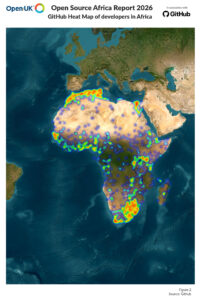
- GitHub developer, contributor and repository data across Africa, with country deep dives into Kenya, Nigeria and Rwanda, plus Scarf download data
Executive Summary
Africa’s developer community is growing at an extraordinary pace, and open source is powering the continent’s inclusive digital infrastructure.
Developer growth at scale
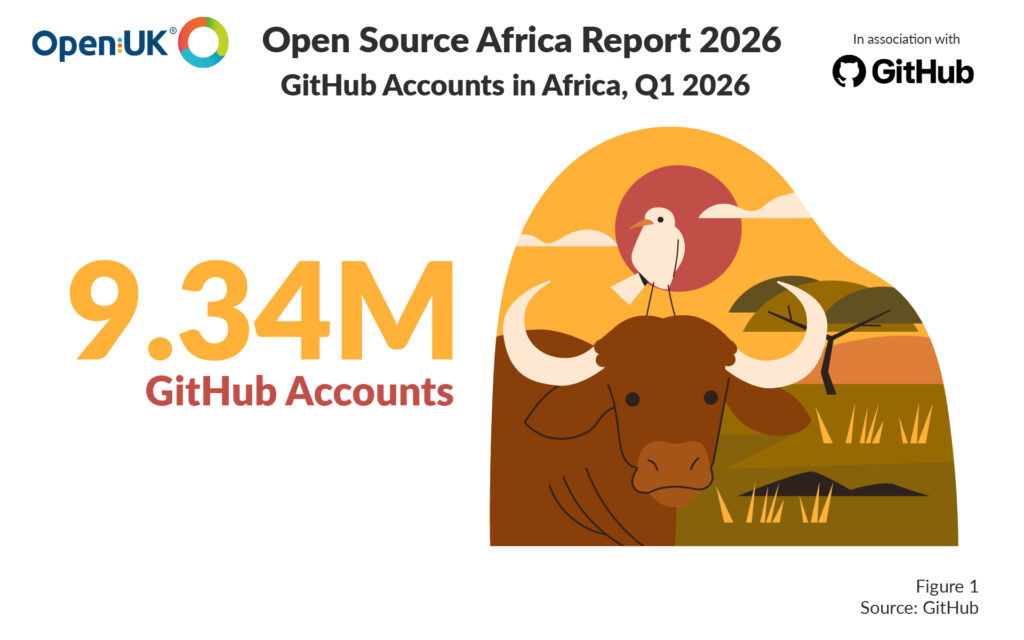
- The Africa and Middle East region added 3.4 million new GitHub developers between 2024 and 2025 (Octoverse); 9.3 million developer accounts across Africa in Q1 2026
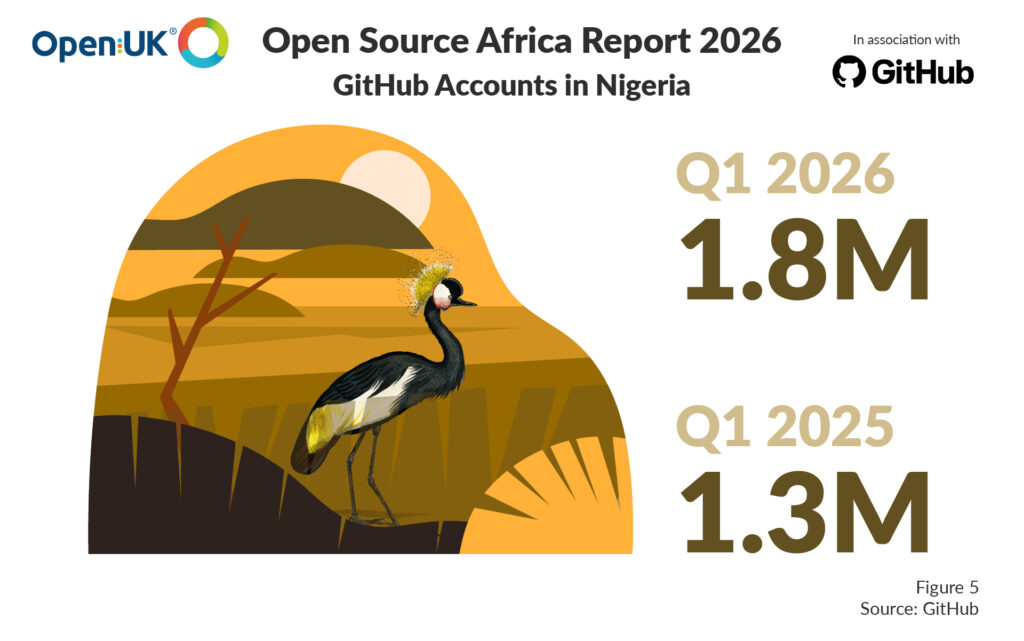
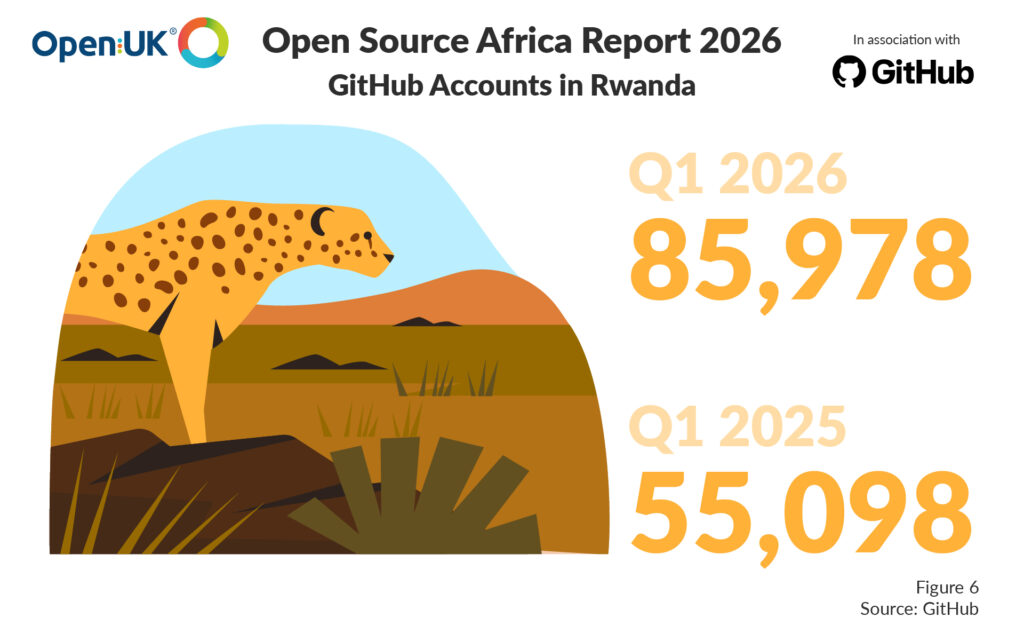
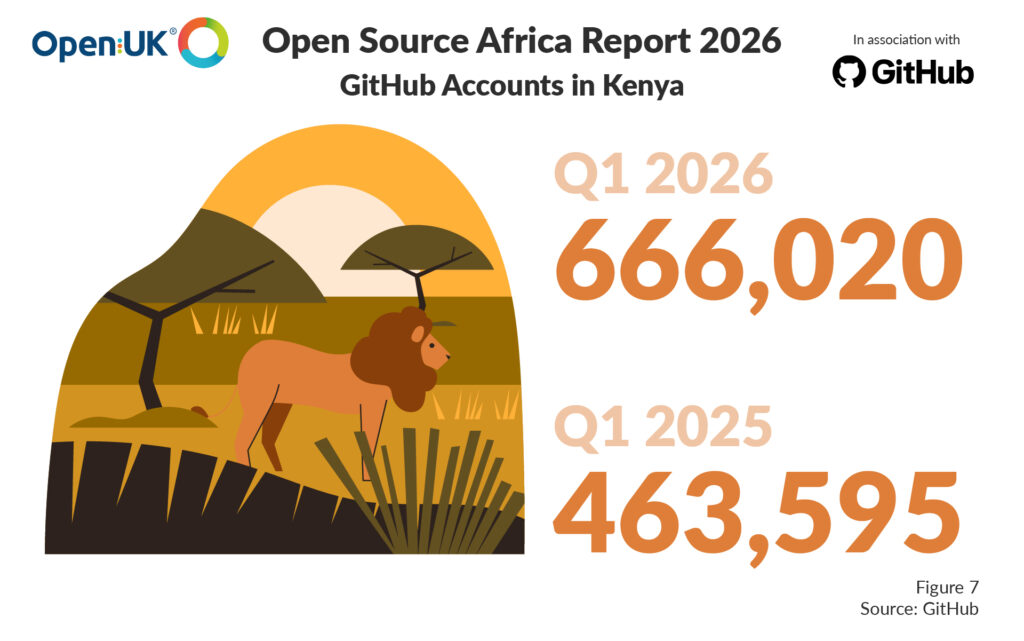
- Nigeria leads with 1.77 million developers; Kenya has 666,020 and the highest developer density at 11.9 per 1,000 people; Rwanda grew fastest, up ~56% year on year to 85,978
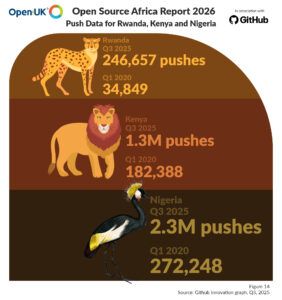
- GitHub push activity across the three countries has grown 7–8x since 2020
- Repositories with 1,000+ stars across Africa more than doubled since 2022, from 82 to 177; Nigeria’s AI contributors tripled over three years
Open source rails for financial inclusion
- The open source Mojaloop payment platform has been implemented across 13 African countries and underpins Rwanda’s national digital payment system, eKash
- Mobile money penetration in Rwanda now exceeds 80% of the population; eKash processes 1.5 million transactions per month
- Rwanda’s RSwitch built eKash largely with local skill — “build for Rwandans, by Rwandans” — demonstrating sovereignty through open source rather than vendor lock-in
Policy commitment
- Kenya has established Africa’s first National Open Source Programme Office (OSPO) through the ITU and UN, targeting 50,000 digitalised government services by 2027
- Rwanda has positioned open source at the centre of its digital strategy under Vision 2050
- Public-sector institutionalisation still lags adoption: strong usage across the economies, limited government download activity
People and human impact
- From Nairobi’s 700+ startups and 40 co-working spaces to YEDA’s coding school in the Kakuma refugee camp (home to 300,000 displaced people), the same pattern emerges: open source lowers barriers, builds skills and connects local talent to global opportunity
- Nigeria’s OSCA has spent seven years building developer culture, though domestic corporate investment in the ecosystem remains nearly absent
OpenUK Annual Survey
Contribute to our Research by sparing 30 minutes to complete our survey in partnership with our Economists in Residence, The PSC – wherever in the world you are, whether you are working or not and whatever sector you might work in.