
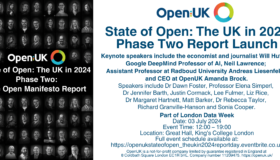
State of Open: The UK in 2024 Phase Two: “The Open Manifesto” Report
Released on 3 July 2024
Exploring the “3 asks” of a new UK government set out in OpenUK’s Open Manifesto, this report contextualises them in Will Hutton’s “We Economy” — democratising technology to the benefit of society via open source. With Harvard putting open source’s global value at $8 trillion, and 27% of UK tech sector Gross Value Add in 2022 demonstrably generated by UK-based individuals and businesses in open source, the report makes the case for building skills, enabling the public sector to do open source better, and opening up AI.
Report Includes:
Introduction and Conclusion
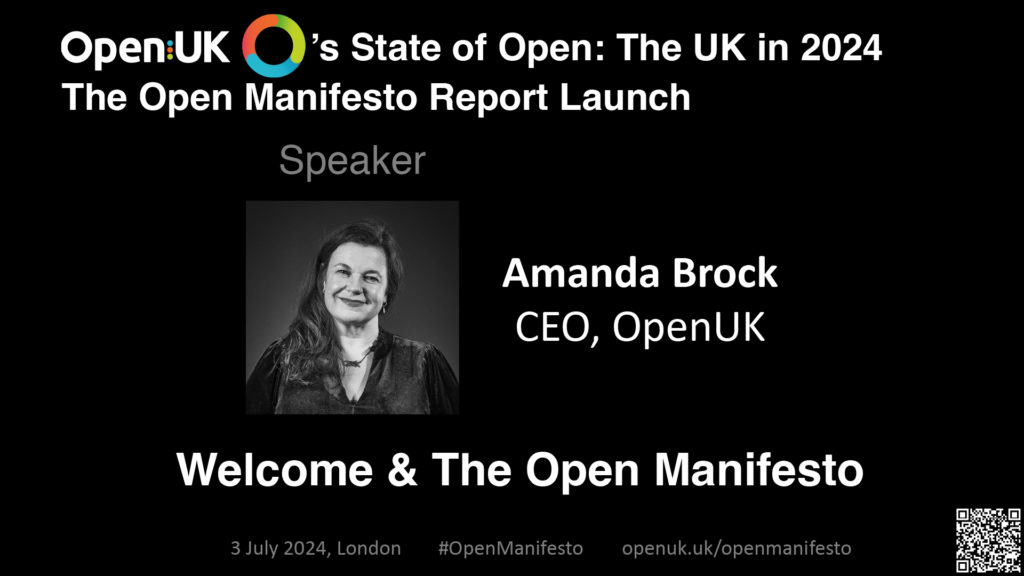
- Introduction to The Open Manifesto Report, Amanda Brock, CEO, OpenUK
- Conclusion, Dr Jennifer Barth, Research Director, OpenUK
Thought Leadership
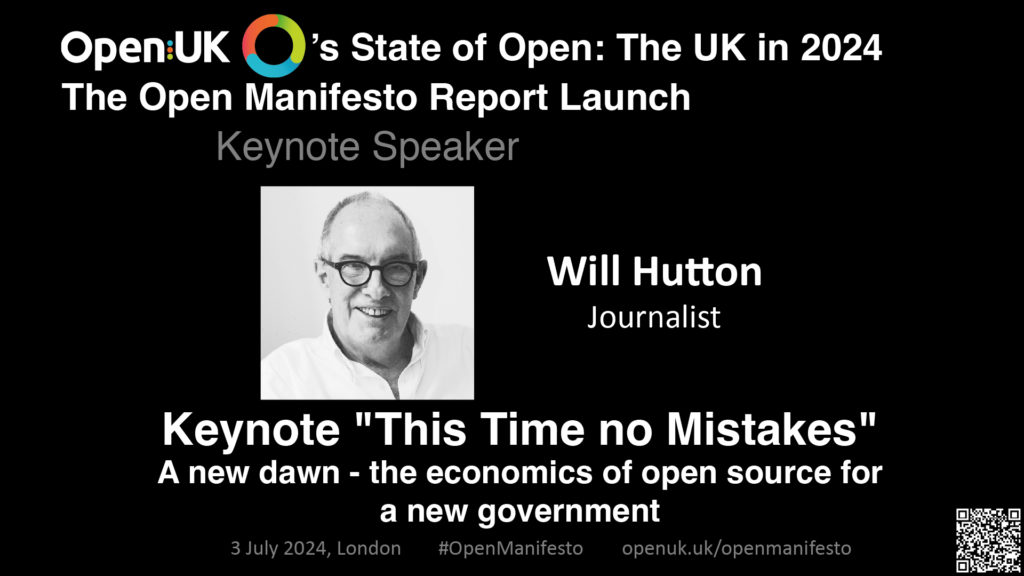
- ‘This Time No Mistakes in Tech’, Will Hutton, Journalist
- Open is the Only Way, Mike Bracken, Founding Partner, Public Digital
- An AI Act Update
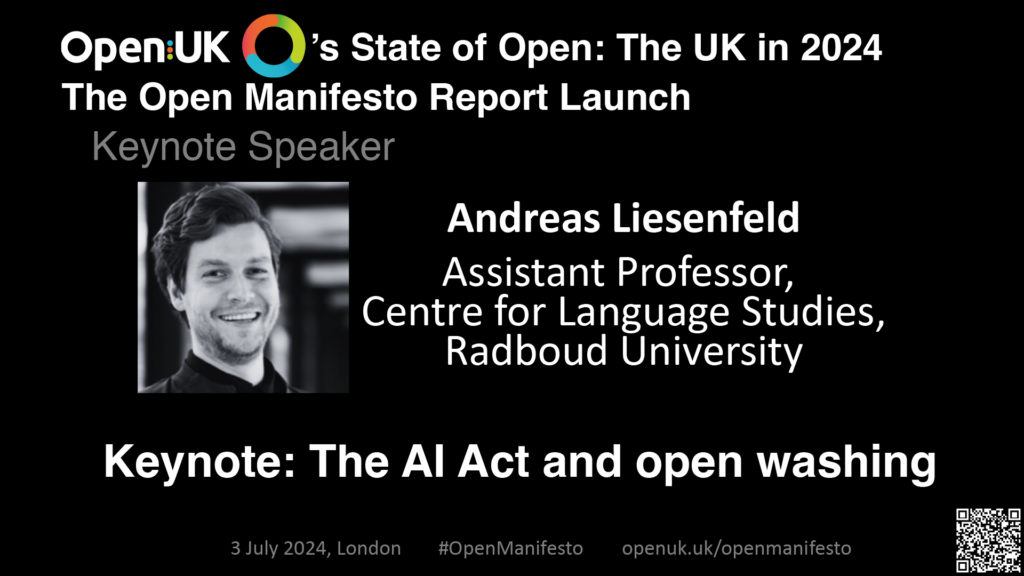
- Towards Meaningful Open AI: Key Findings and Societal Implications, Andreas Liesenfeld and Mark Dingemanse, Centre for Language Studies, Radboud University
Fireside Chats
- Open Source Program Offices (OSPOs), Chris DiBona, Senior Associate Fellow for Cyber Security Research, RUSI (founder of Google’s OSPO)
- NHS Scotland, Albert King, Chief Data Officer, NHS Scotland
- The Columbia Convening, Udbhav Tiwari, Director, Global Product Policy, Mozilla
Case Studies
- Heatweb, Voror Health Platform, King’s College London and FastTrackML
Data
- Skills: UK-based GitHub accounts, contributor data and the international job market
- Public sector: top open source repositories, download data and usage
- AI openness: top UK AI repositories, repositories by year created, UK versus Europe and global, and growth in UK contributors to AI open innovation
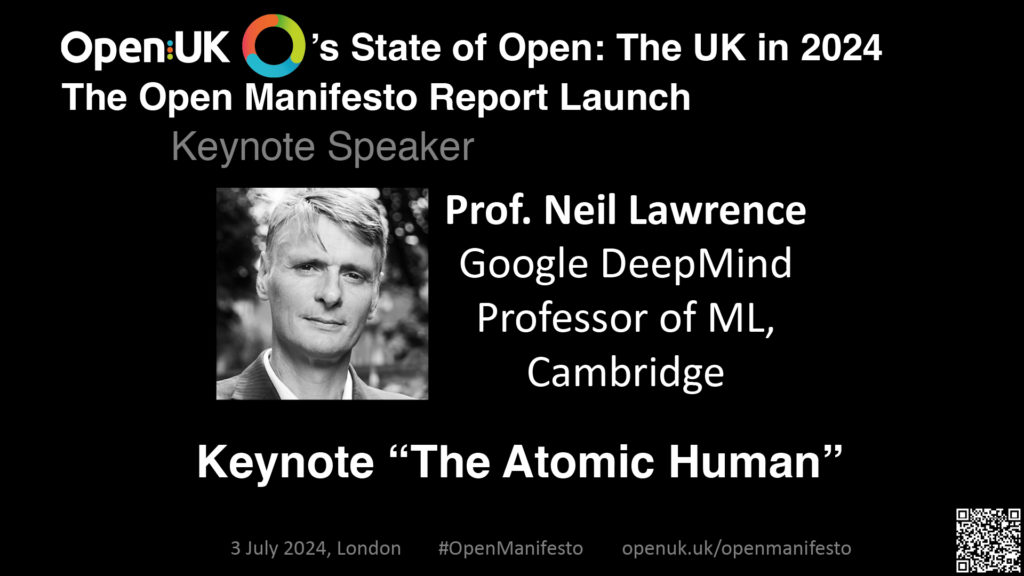
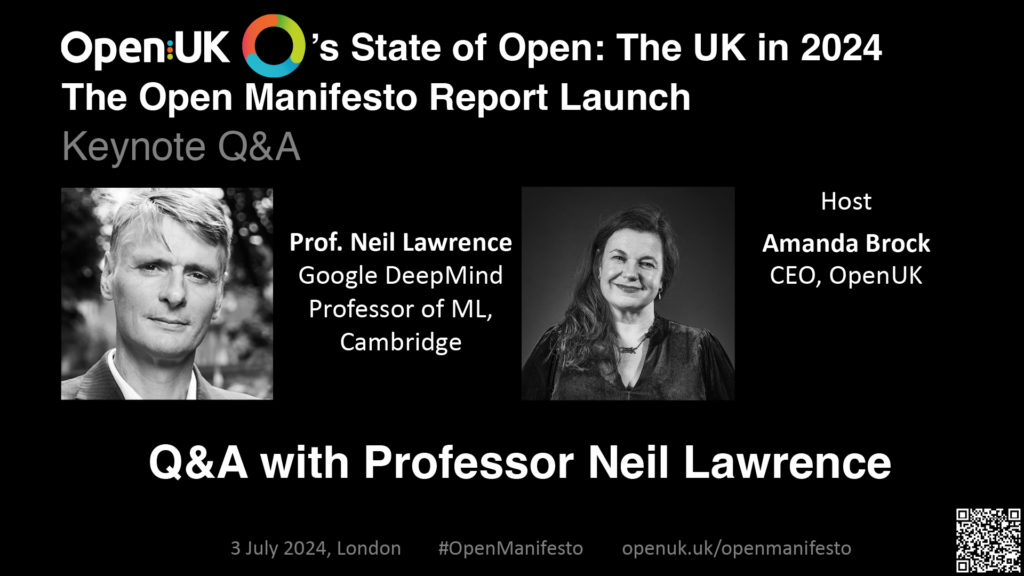
OpenUK Report Launch at King’s, London, 3 July 2024





Executive Summary
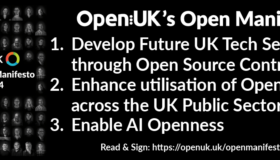
The Open Manifesto makes three asks of a new UK government, contextualised in a digital economy where open source software is the norm — used in 96% of the total codebase in all software stacks and infrastructure.
Ask 1: Building skills in open source software
- Represent open source properly in apprenticeships and the national curriculum, and enable rural and urban employment across the UK in highly paid home-working roles with international employers
- Contribution to open source gives individuals a “living CV” on GitHub and the hands-on experience that classroom teaching lacks; home-based international workers form a “submarine under the UK digital economy”
Ask 2: Enabling the UK public sector to do open source better
- Leverage the UK’s late-mover advantage, learning from the successes and failures of open source programme offices globally to build public sector “curation” of open source in an existing central department
- Require open deliverables from publicly funded innovation wherever possible, honouring the UK’s decade-old (at the time world-first) open source first policy
Ask 3: Open up AI
- Build on the UK’s strength in setting a high bar for regulating openness in AI, and grow an AI safety ecosystem around open source tools like the AI Safety Institute’s Inspect platform
- Understand the gradients of openness: Liesenfeld and Dingemanse’s survey of 45 “open” models found open-washing is widespread, with corporations co-opting “open source” while shielding models from scrutiny — and the EU AI Act putting legal weight on the term without defining it
- Mozilla’s Columbia Convening showed surprising consensus on openness in AI, with training data the key point of divergence
The economic case
- Harvard values open source globally at $8 trillion; 27% of the UK tech sector’s Gross Value Add in 2022 is demonstrably generated by UK-based open source individuals and businesses
OpenUK Annual Survey
Contribute to our Research by sparing 30 minutes to complete our survey in partnership with our Economists in Residence, The PSC – wherever in the world you are, whether you are working or not and whatever sector you might work in.