
UK’s Going for Gold on AI
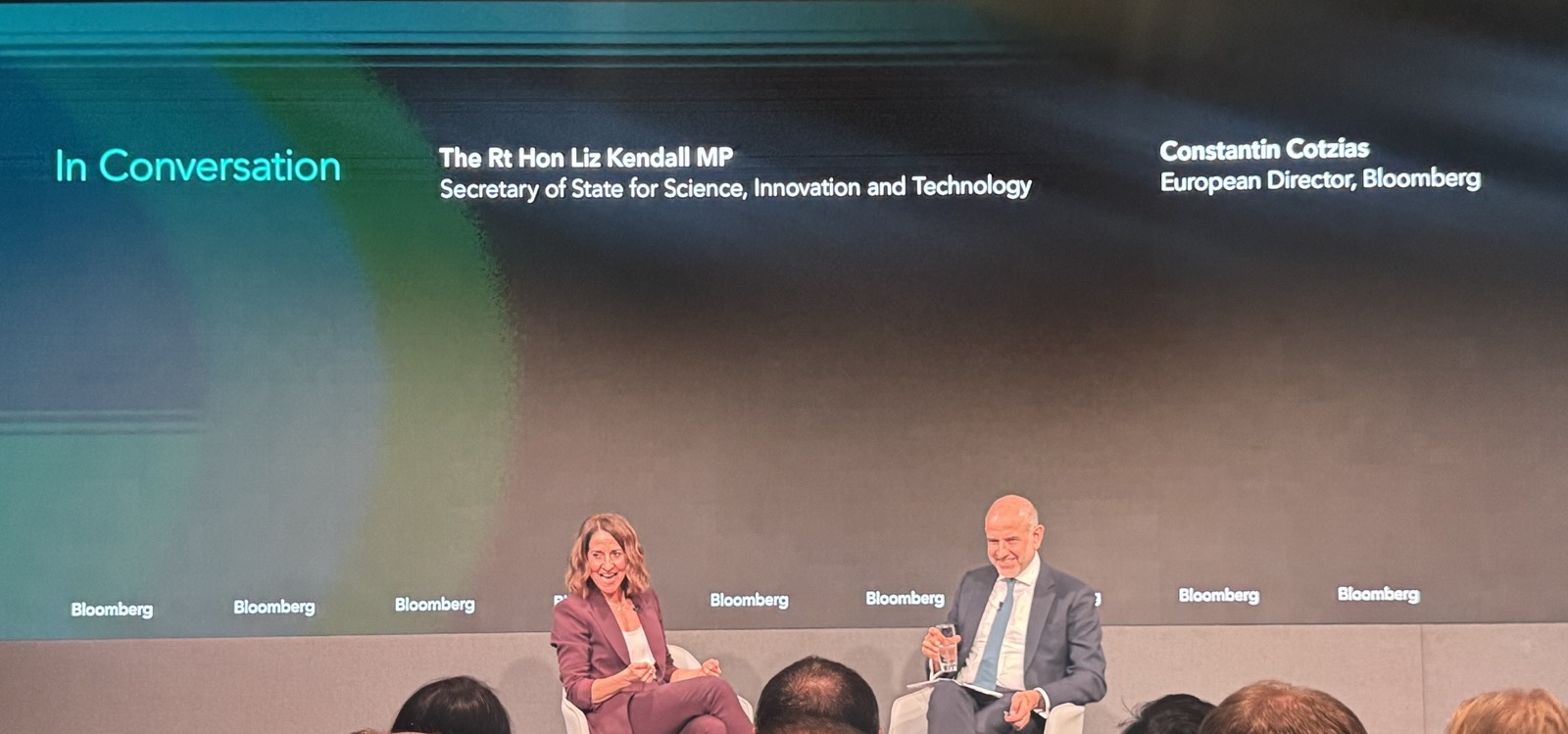
Despite getting off to a slow start, giving her first AI speech almost six months after taking office, Liz Kendall, the UK’s Secretary of State for the Department of Science, Innovation and Technology, made clear that she has a competitive nature and wants to lead UK AI moving up the global league table. This is going to need significant government action and more than we have seen to date.
Catching the world’s two leaders in AI, the US and China, will not be an easy feat for any of the pool of “middle countries” making up the AI second tier – Singapore, Canada, France, Germany and India alongside the UK. They are so far behind the leaders and gaining any significant traction on the leaders will be a hard slog. To use a cycling analogy, the UK is in the peloton while the two leaders streak ahead, thanks to their huge investments in innovation. Bear in mind that understanding the value of AI to the future of the global economy, neither of the leaders is showing any sign of giving up on their positions and these are carefully guarded.
Kendall wants to train the UK’s AI industry like elite athletes to encourage them to move up that leader board and go for gold. But there’s more than one way to build Team GBAI. The world’s AI leaders have used markedly differing approaches to date.
Why does being open matter around AI?
Put simply, open technologies allow anyone to use that software or AI and to collaborate on it without the license fees of closed and proprietary software or AI. Basking in the warmth of Big Tech’s success, built over 30 years of digital dominance from California, the US’s approach has been a largely closed one. Relying on its global dominance in existing markets like cloud, and inroads into the public sectors of most nation states, the US leaders haven’t felt the need to open up around AI or to share their outputs openly. Whilst OpenAI may have begun life as an open source foundation partly funded by Elon Musk, but it quickly closed down its outputs to rely on its moat of intellectual property that enables it to drive revenue.
The notable US exception has been Facebook and WhatsApp owner Meta, which partially opened up its Llama AI model in 2023, but is now rumoured to be focused on closed AI.
Taking the opposite approach, China has focused on open source in its software and AI. The biggest example of this is the success of DeepSeek, releasing its open source “R1 large language model” in 2025, almost exactly one year ago. China has had a clear open source strategy for 8 years, which has been very public. Chinese developers also work in a very different way to those in the US. They focus sharply on getting the most results out of computer resources they have, reducing cost, dependence and being more environmentally friendly. Being open for them means that others can use their outputs freely and enables adoption at scale which in turn can build influence and impact. China’s success in open source saw the US shift last summer to “encourage open weights and models” in its AI Action plan.
What can Britain learn … or do we already know the answer?
The Chinese engineers’ approach to building technology is reminiscent of how British technologists have approached innovation too. Rather than relying on brute force, ingenuity and collaboration have been at the forefront of how engineers approached problems.
A familiar example is Sir Tim Berners Lee who built the world wide web in Switzerland at CERN. This technology could have been kept quiet or restricted to those that paid a license, but instead he released it on an open basis. This led to the development of the freely available Internet that we have all benefitted from today. This fundamental freedom of access to innovation like the internet is at the heart of open source. It can be seen in stark contrast to the likes of cloud computing.
The UK plays a key but quiet role around leading innovation globally around open source. Open source enables any AI whizz to build on top of each other’s work, iteratively developing and innovating. This has the potential to give access to all and democratise technology. At the same time, it also offers an unprecedented route to adoption at scale, building the global influence so critical in a world of geopolitical shift and supply chain weaponisation.
The UK is home to many leaders in open source. We have long been Europe’s number one in open source software and AI. We have seen the agentic AI equivalent of DeepSeek in AutoGPT, founded by Scotland’s Toran Bruce Richards. As creator of the general purpose agent, AutoGPT, he built the fastest growing open source code repository in the world. There are employees of international companies like Anthropic, quietly innovating in London to build the Model Context Protocol which is at the heart of today’s AI infrastructure and one of the most important pieces of AI technology to date.
The much lauded UK company NScale has received more funding than any European start up in history. It is building out as a cloud provider, using open source. The company’s Vice President of engineering Nick Jones is a widely recognised long term contributor and leader in open source software. Amazon, Google and Microsoft have long since built their cloud success on open source, and NScale is following that same route to success – building on open source.
The UK’s open source communities and leaders are simply getting on with it, collaborating with others across the world and building world leading technology whilst largely ignored by the UK’s political and policy leaders. This collaboration deliver gains around performance that everyone can benefit from, as well as creating new business opportunities for British companies globally. If Liz Kendall wants to go for gold, she can engage with the prime athletes quietly training for success already, and bake their values firmly into the UK’s future policies.
Recent Posts
 Sovereignty, policy, and OpenUK with Amanda Brock, Open Source Security Podcast
 Open-weight models and SS1/23: can you validate what you can’t fully open?
 OpenUK’s Rising Ambassadors Evening September 10th 2026
 Your AI agent shouldn’t spend blindly: open standards keep it honest
 Mapping the open source value chain (and who sits where)